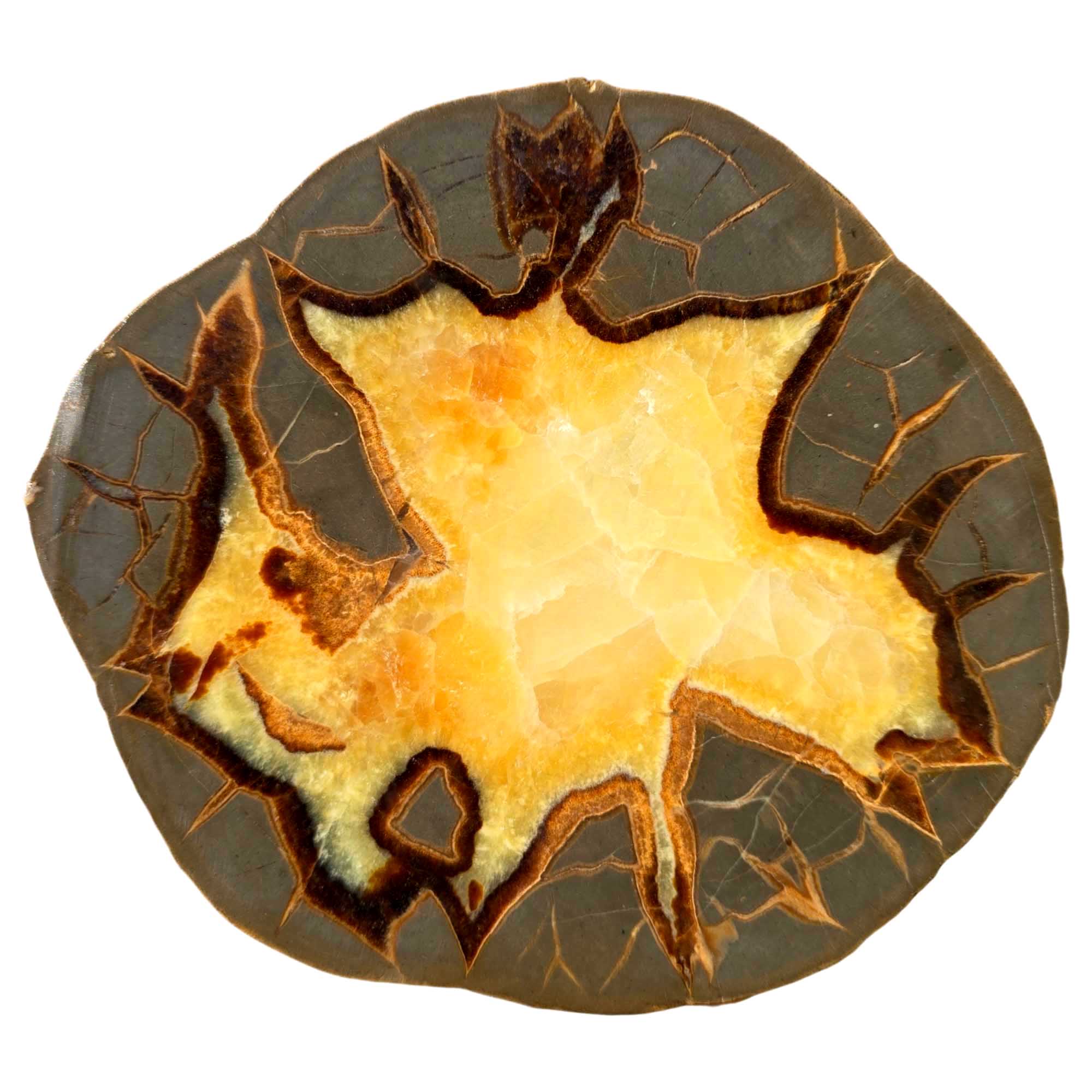
🪨 Septarian Nodule Slab – Calcite-Filled Geometric Pattern
Here’s a gorgeous large slab of Septarian Nodule with beautifully defined calcite patterning and bold natural patterns that form intricate geometric designs. The contrast in this piece is outstanding — it looks almost like cracked earth or dragon scales, perfect for a statement display or a creative cabbing project. I couldn’t help but see a flying dragon scene in this one!
🔹 Key Features
Material & Origin: Septarian Nodule, 100% natural, from Utah, USA
Dimensions (Inches): ~6″ × 5.9″ × 0.34″
Weight: ~15 oz (approximate)
Unique Characteristics: Calcite-filled fractures, geometric structure, dramatic visual contrast
(You will receive the exact piece shown in photos.)
🪨 Material Overview, History, and Geology
Septarian Nodules are distinctive sedimentary concretions that formed millions of years ago from decomposed organic matter in ocean sediments. As the organic material decayed, gas pockets created voids that were later filled with calcite, aragonite, and sometimes barite, producing the iconic yellow-and-brown geometric patterns we see today.
These nodules can be solid or hollow geodes, sometimes containing sparkling calcite crystals. They are found in regions such as Utah and Morocco, and occasionally contain fossil remnants, making them prized among collectors. When sliced and polished, they reveal bold natural designs perfect for decorative slabs, cabochons, or display specimens.
📏 Additional Notes
Natural Stone: This is a natural, unpolished slab that may contain surface pits, fractures, or inclusions — all part of its unique geological story.
Photos: All photos are taken wet to show the polished potential. The final image is taken dry to reveal surface detail and texture.
💎 Collector’s Highlight
A striking example of Septarian with crisp calcite patterning and bold natural fractures — ideal for both collectors and lapidary artists.